

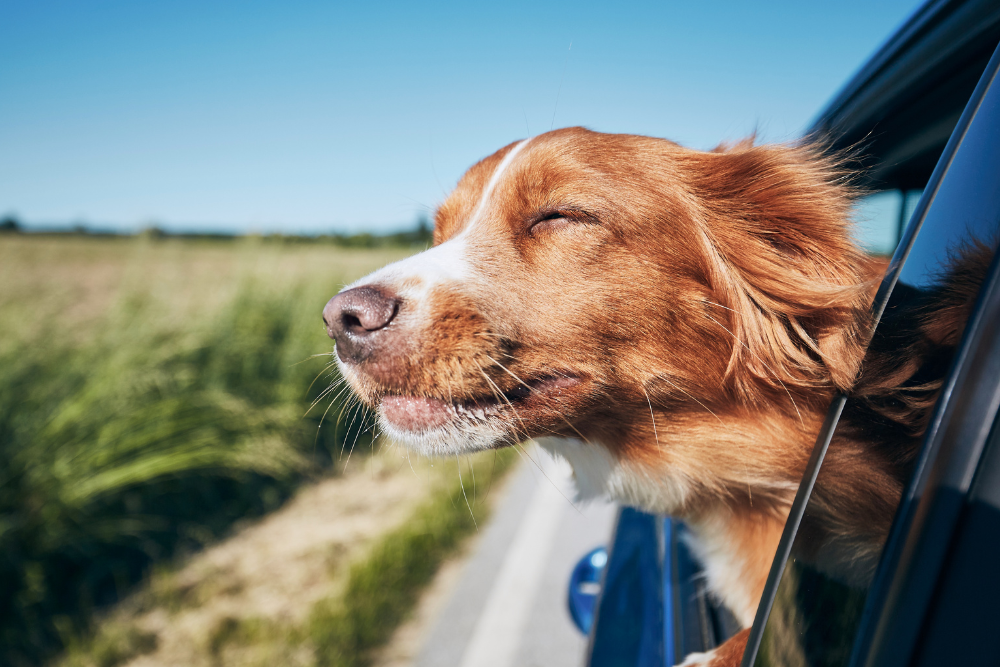
Electric cars are quieter and smoother to drive than their petrol and diesel counterparts and it seems our four-legged passengers might appreciate the difference too.
Research commissioned by Škoda, alongside veterinary surgeon and dog expert Dr Scott Miller, found that a dog showed noticeably fewer signs of stress when travelling in an electric car compared with equivalent petrol and diesel models.
Meet Mango, the EV-loving Cocker Spaniel
The research followed Mango, a one-year-old Cocker Spaniel, as he travelled around the same private test track in three different Škoda models, one electric, one petrol and one diesel.
Mango's resting heart rate was 80 beats per minute (BPM).
When travelling in the electric Škoda Elroq, this increased to 100 BPM. However, it climbed considerably higher in the other cars:
-
Electric: 100 BPM
-
Petrol: 120 BPM
-
Diesel: 125 BPM
It wasn't just Mango's heart rate that changed. His behaviour did too.
In the electric car, Mango was observed lying comfortably on the back seat and appearing relaxed enough to almost fall asleep. In the petrol and diesel cars, he appeared more alert, distracted and tense.
Why might dogs prefer travelling electric?
According to the experts involved in the research, some of the characteristics that make EVs comfortable for us could be particularly noticeable to dogs.
Electric vehicles have no traditional engine noise, no conventional gear changes and typically produce fewer vibrations than petrol or diesel vehicles.
Dog behaviourist Anna Webb also highlighted dogs' particularly sensitive hearing, meaning they can detect sounds and frequencies from traditional engines that we may not even notice.
Mango isn't the only one...
This isn't the first research to suggest dogs could benefit from travelling electric.
A University of Lincoln study involving 20 dogs compared their behavioural and physiological responses during journeys in electric and diesel cars.
Researchers found that although dogs spent a similar amount of time lying down in both vehicles, they broke their lying position around 50% more often in the diesel car suggesting they were less settled.
The researchers concluded that there was no evidence that travelling in an EV negatively affected dog welfare, while also identifying differences worthy of further investigation, including the potential impact of noise and vibration.
Dogs have a say in your next car, too
For many of us, our dogs aren't just occasional passengers.
A wider Škoda survey of 1,500 dog-owning drivers found that 53% travel with their dog at least once a week, while 41% said their dog's comfort is something they consider when choosing a car.
So, while we wouldn't suggest choosing your next EV based entirely on your dog's opinion, boot space, accessibility, cabin comfort and a smooth drive can all be important considerations if your four-legged friend regularly comes along for the journey.
And if the research is anything to go by, they might just appreciate you going electric too.
Read Skoda & Dr Scott Miller's Study